

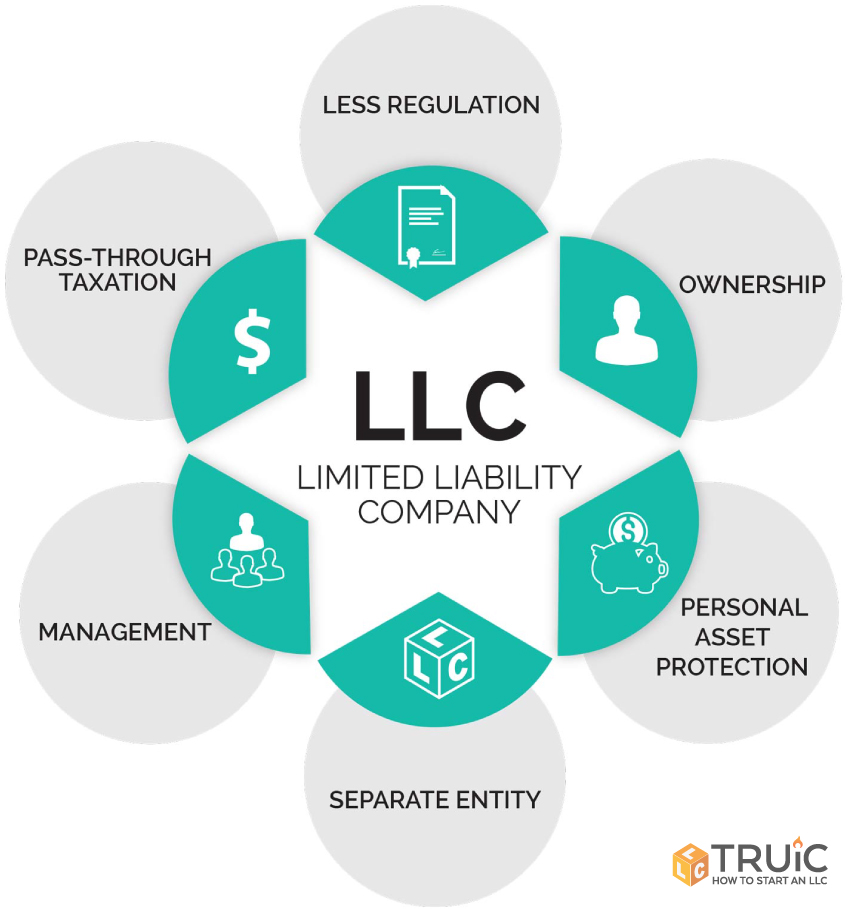
An LLC (Limited Liability Company) is not a separate entity in terms of tax entity, like a corporation. An LLC is generally known to be a “pass-through” entity. Being a pass-through entity means that all taxes, losses, and profits, etc. are directed towards the LLC owners’ personal tax returns. Under IRS Form 8832, for tax purposes, owners of LLCs have the freedom to choose different structures of their businesses via “entity classification” elections. These guidelines are made to provide a way for US LLC’s owners to apply a corporate tax structure to their businesses. LLC created by the statute of the state instead of the government. This allows for flexibility in terms of taxation. That being said, the way you choose to structure your business comes with legal and tax repercussions.
LLC Default Tax Classification
This pertains to the way the IRS categorizes an LLC for taxation after it applies for an EIN (Employer Identification Number). Although an LLC is permitted to change its tax status by applying for another tax classification, it is usually taxed in accordance with the number of members it has in it. If an LLC has a single owner, it is categorized as a “sole proprietorship”. An LLC having two (or more than two) members, also known as a multimember LLC, is categorized as a “partnership”. Both sole proprietorship and partnership classifications are “pass-through” and taxed according to that characteristic.
Sole Proprietorship
An LLC consisting of one member is considered a sole proprietorship, is classified as a pass-through entity, and is taxed that way. The LLC is not required to pay taxes or file a refund with the IRS. All gains and losses of the LLC have to be reported on Section C and then be submitted with the tax return. The owner of the LLC, however, does have to pay self-employment taxes for the company’s gains if they are running the business actively.
Partnership
An LLC with more than one member will be taxed as a partnership. The taxes obtained for the multimember LLC will be passed through to the members in case a corporate structure is not chosen. Every member or partner will be required to pay self-employment taxes on each profit they receive. Similar to a sole proprietorship, the LLC owner will only have to pay self-employment taxes if the company is actively run.
S Corp
S CorpAn LLC classified to be taxed as an S Corporation holds a lot of similarity to how taxation on a sole proprietorship works. Through this structure, stockholders can act as employees, saving on tax. Taxes
obtained by an S Corps LLC are distributed to the owners of the LLC as personal tax obligations. Because of this, the members do not have to pay taxes twice. In an S Corp LLC, all the profits do not have a commercial income tax imposed on them. Single owners of LLCs are taxed according to their business profits.
C Corp
C Corp LLCs can obtain a lot of perks, unavailable to other structures. A corporation structure allows an LLC owner to separate their personal and business resources. An LLC is taxed as a C Corp means it is considered a separately distinguishable business entity and is taxed that way. The corporate income taxes are not directed towards the owner’s private taxes. A-C Corp taxation structure allows for more possibilities to save on taxes through tax decreases and allowing the LLC owners to keep their revenues. Another perk that comes from an LLC being classified and taxed as a C Corp is known as “income splitting”. Through the act of income splitting, the LLC owner leaves some money in the business if they make an adequate amount of money. They can take a certain amount, but not to the point of eradicating the LLC’s gains. This also keeps the owner in a reduced tax bracket.
