

After all, the Russian president presides over a huge arsenal of nuclear weapons. He promised “such consequences that you have never experienced in your history” to anyone who “tries to interfere with us…”
While NATO countries are strengthening defenses on the alliance’s eastern flank and the West is imposing severe sanctions, none are intervening directly in Ukraine’s defense. So the key question is: What, if any, is the long-term price Putin will pay? One outcome thus far: nearly worldwide condemnation of Russia for its president’s attack on Ukraine and a wave of sympathy for the people of Ukraine.
“The threat from a nuclear-armed dictator defying the international community and sending a massive military machine to crush its neighbor in the 21st century cannot be overestimated,” wrote Frida Ghitis. “The international community, led by the US, cannot be intimidated by a Russian tyrant who throws his critics in prison and invades his neighbors.”
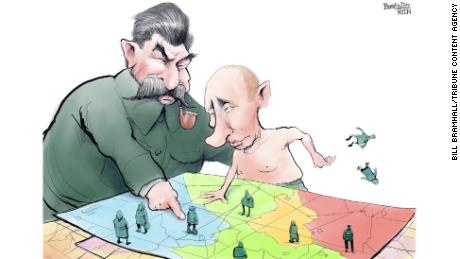
At a 2015 reception, Treisman “asked Putin about his planning for the occupation of Crimea. ‘I was even surprised at how well it went!’ he told me with a smile. The West must make sure he does not find it so easy this time.”
The sanctions
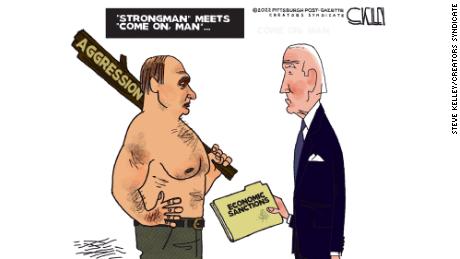
“For the strongman, a government’s only meaningful source of legitimacy is strength,” wrote Franklin Foer in the Atlantic. “Borders are simply an expression of a nation’s might. A people’s sense of nationhood and its claims to its own history are meaningless if it is too weak to defend itself…
For more:
Bravery in Kyiv
In Kyiv, Olesia Markovic‘s husband woke her up on Thursday with news that Russia was firing shells at Ukrainian targets.
“We have packed the necessities — folder with documents, laptops and carriers for our three pet cats in case we hear the shelling siren and have to go to the bomb shelter.” Her son got a day off from school “and doesn’t seem concerned — after all, random school closures became the norm during lockdown. He took a choco-spread sandwich and went to the living room to watch Ironman (his favorite superhero) while we remained glued to our phones and updates of war.”
Friends have offered her sanctuary in the US and many other countries, but “what is much more important now is to build a safety net for Ukraine. That means calling on the international community for help — diplomatic solutions, sanctions, pressure on Russia — anything that would make a dictator stop in his tracks.”
“In the meantime, Ukraine will stand strong. It’s not the first time in our history that we resisted a threatening empire.”
In the western Ukraine city of Lviv, Michael Bociurkiw wrote Thursday, “The streets were empty and quiet but as the first rays of daylight emerged, anxiety and fear had begun to take hold: air raid sirens blared across the fortresses, churches and quaint cobblestone streets of Ukraine’s cultural capital. A male voice instructed people to shelter in place and turn off their gas connections. People started to form long lines at bank cash machines and head to the markets while they were still open.”
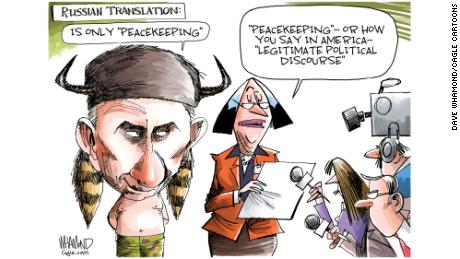
A national hero for Ukraine
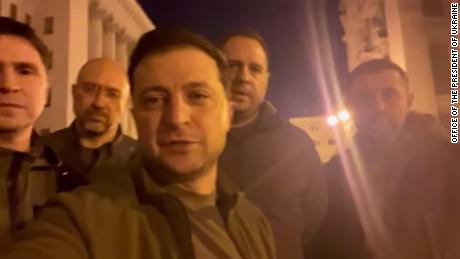
Ukrainian President Volodymyr Zelensky is a comedian-turned-politician whose popularity had declined sharply before this crisis. But, as Jay Parini wrote, “The past week has transmogrified Zelensky from a rapidly dwindling presidential figure into a national hero on a massive scale. He has shown himself to be a man who has dug into himself and found an inspiring store of courage. When the United States offered to evacuate him from Ukraine, he stood his ground, saying, ‘The fight is here; I need ammunition, not a ride.'”
“He has posted several videos online, and they’ve inspired a fierce defiance among the Ukrainian people. In one video titled ‘We are here. We are in Kyiv. We are protecting Ukraine,’ Zelensky can be seen surrounded by his top advisers. ‘We are all here. Our army are here. Citizens and society are here,’ he says. ‘We are defending our independence, our state, and it will remain so.'”
“Zelensky, a fluent Russian speaker, has also appealed to Russians in another video, urging them to ‘just stop those who lie, lie to you, lie to us, lie to everyone, to the whole world. We need to end this war. We can live in peace, in a global peace.'”
For more:
Ketanji Brown Jackson
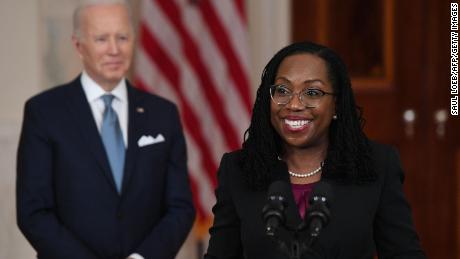
Biden announced his choice for a US Supreme Court seat Friday, introducing Judge Ketanji Brown Jackson at a White House ceremony. In concluding her remarks, Jackson pointed out that she shares a birthday with the late Constance Baker Motley, the first Black woman to serve as a federal judge. If confirmed by the Senate, Jackson will blaze a new path herself by becoming the first Black woman on the nation’s highest court.
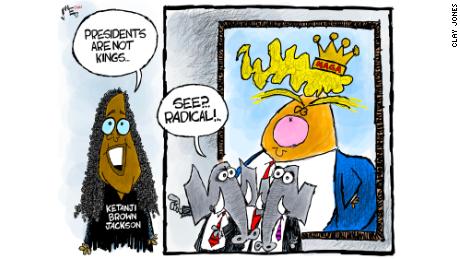
For more on the Supreme Court:
Trump’s take
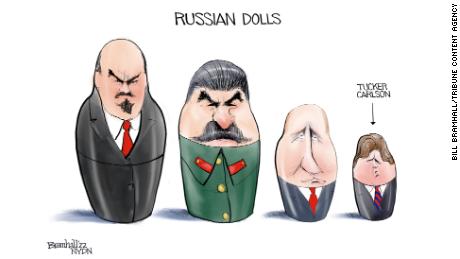
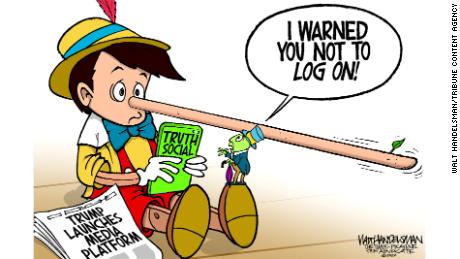
Just how profoundly former President Donald Trump altered the politics of the right in America could be glimpsed last week by the way some conservatives praised Putin and made excuses for his hostility toward Ukraine. Not least was Trump himself, who referred to the Russian leader’s takeover of separatist regions in eastern Ukraine as “genius” and called Putin “very savvy.”
10 years after Trayvon Martin’s death
CNN legal analyst Areva Martin wrote that it wasn’t a surprise that jurors quickly found the three men who shot and killed Ahmaud Arbery in Georgia guilty of federal hate crimes.
“The prosecution called 21 witnesses, with many testifying about horrific and offensive racist slurs and rants by the defendants — hatred aimed specifically at Black people,” Martin noted. “The language that witnesses attributed to all three men was so disturbing as to cause a juror to ask about counseling and to send one witness off the stand in tears.”
As Black History Month nears its end, Peniel E. Joseph noted this weekend’s 10-year anniversary of the killing of Trayvon Martin and the convictions Thursday of the three former Minneapolis police officers for depriving George Floyd of his civil rights by showing deliberate indifference to his medical needs as another officer, Derek Chauvin, kept his knee on Floyd’s neck for more than 9 minutes and killed him.
“Trayvon Martin died in a country that would re-elect Barack Obama but proved unable to hold anyone accountable for the lost life of a Black teenager in Florida visiting his father,” Joseph wrote.
Don’t miss
AND…
War on screen
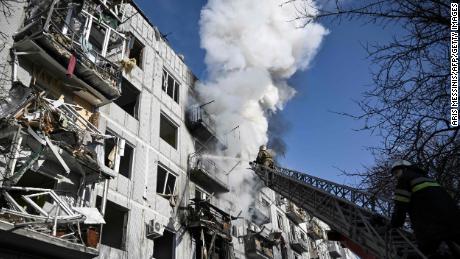
The disturbing images from Kyiv reminded Nicole Hemmer of a moment in her childhood. “We had only just gotten cable at our home in rural Indiana, and after school my brother and I would turn on CNN to see the sky over Baghdad filtered through night-vision lenses, bathed in a neon green color reminiscent of the glow sticks we liked to wave at the skating rink.” It was 1991, and the US was leading the international coalition responding to Saddam Hussein’s invasion of Kuwait.
“Soon our dinnertime conversations were peppered with talk of Scud missiles and General Norman Schwarzkopf (as German Americans, we quickly mastered his name) as we filled our parents in on the dramatic scenes we watched while they worked,” Hemmer wrote.
“My dad had little appetite for our reports. A reluctant Vietnam veteran, he had experienced the first televised US war as a combatant… but my dad’s experience was not the norm. For most Americans, war has been a spectator event, watched in crowded theaters and quiet living rooms. The invasion of Ukraine is no different. Even though the media have changed — the current war is unfolding not just on cable news but also on TikTok and Twitter feeds — the act is the same: most of us consume wars rather than experience them.”

