
Orléans homeowners asking about heat pumps usually start with the same question: will it actually keep the house warm in January? It is a fair concern in Ottawa’s east end, where winter brings long stretches well below minus 20°C, wind off the Ottawa River and the occasional cold snap that tests every heating system on the street. Older heat pumps earned a reputation for giving up in that kind of weather. The cold-climate systems sold today are a different class of equipment, and when they are sized and installed properly they can carry most or all of the heating load in an Orléans home.
Many houses in Orléans, from established streets in Convent Glen and Queenswood Heights to newer homes in Avalon and the Cardinal Creek area, heat with natural gas forced air today. That shapes the options. This article explains how cold-climate heat pumps work in deep cold, how they fit alongside or in place of a gas furnace, what winter does to the outdoor unit and how to judge an installation proposal before signing.
How a Cold-Climate Heat Pump Heats an Orléans Home Below Minus 20°C
A heat pump does not make heat by burning fuel. It moves heat that already exists in the outdoor air into the house through a refrigerant circuit, the same principle a fridge uses, run in the other direction. Even at minus 25°C there is usable heat in outdoor air, and modern cold-climate units use variable-speed inverter compressors and refrigerant systems designed for low temperatures to extract it. Instead of switching fully on and fully off, the compressor ramps up and down to match the heat the house is losing at that moment.
What changes as temperatures fall is capacity and efficiency. Every air-source heat pump delivers less heat, and uses more electricity per unit of heat, as the outdoor temperature drops, while the house needs more heat at the same time. The point where those two lines cross is called the balance point. Below it, something else has to make up the difference, whether that is electric backup elements, a gas furnace or a heat pump sized generously enough that the balance point sits below the temperatures the house normally sees.
That is why brochures should be read carefully. The useful figures are the manufacturer’s rated heating capacity at low outdoor temperatures, such as minus 15°C and minus 25°C, compared against the home’s calculated heat loss at the local design temperature. Those numbers sit in the engineering data tables, not the headline rating. A unit that looks large on a mild day may deliver noticeably less on a February night in Orléans, and the proposal should show that the gap has been accounted for.
Hybrid or All-Electric Heat Pumps for Gas-Heated Orléans Homes
For a gas-heated house, there are two broad routes. A hybrid, or dual-fuel, system adds a heat pump to the existing ductwork alongside the gas furnace. The heat pump handles heating through most of the season, and the controls switch to the furnace below a set outdoor temperature or when the heat pump cannot keep up. This suits homes whose furnace still has years of life left, and it keeps a combustion heat source for the coldest nights. Because the furnace and gas piping stay in service, any work on them belongs to a TSSA-registered gas contractor.
An all-electric system replaces the gas furnace with a cold-climate heat pump and an electric air handler, usually with resistance backup elements for defrost and extreme cold. It removes combustion from the house and can end the gas account entirely if no other gas appliances remain, but it asks more of the electrical service and makes correct sizing even more important. It is often considered when the furnace is near the end of its life and would need replacing anyway.
Ductwork is the other deciding factor. Some older Orléans split-levels and bungalows have ducts sized for a furnace that delivers very hot air in short bursts, and a heat pump moving larger volumes of warm, not hot, air may need return or supply changes to stay quiet and comfortable. Additions, rooms over garages and finished basements that have always run cold are often better served by a ductless head or two than by forcing more air through an undersized duct run.
Snow, Ice and Defrost: Placing a Heat Pump on an Orléans Lot
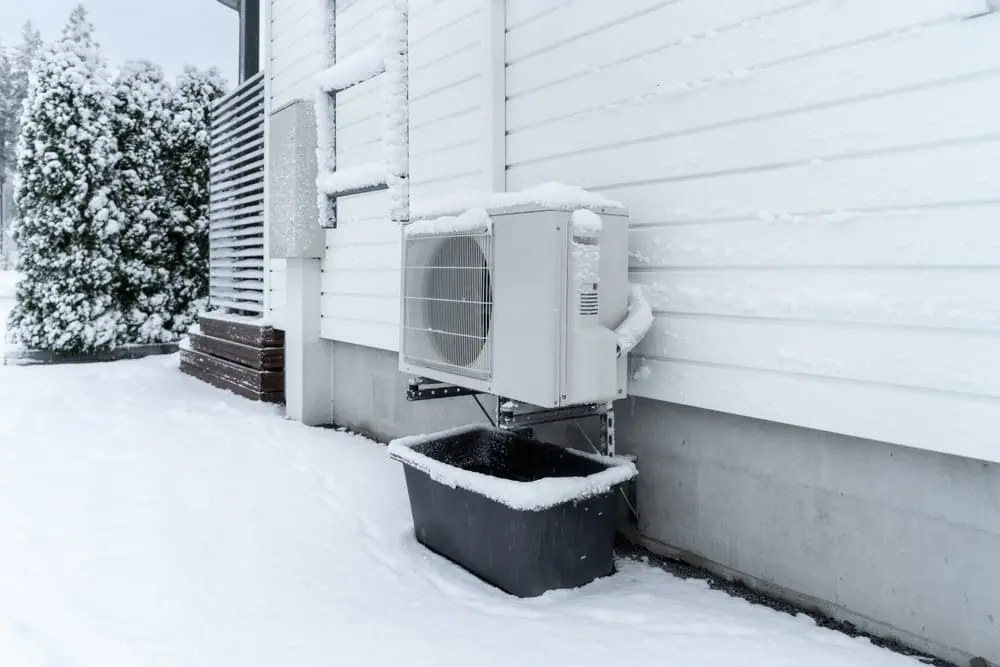
The outdoor unit spends the whole winter in the weather, so where it goes matters. In Orléans subdivisions with narrow side yards, the obvious spot is not always the right one. The unit should sit on a stand or wall bracket high enough to clear typical snow depth, with open space around the coil so air can move freely. It should not sit under a roof edge or valley where ice and meltwater fall from above, or anywhere snow from clearing the driveway will be piled against it.
Defrost is the other winter behaviour to plan for. When frost builds on the outdoor coil, the system briefly reverses to melt it, and that meltwater has to go somewhere. Above a walkway or a shared side path, it can freeze into a slick patch, so the drain path should lead toward ground that can absorb it and away from foot traffic. A short cloud of vapour during defrost is normal, though neighbours seeing it for the first time sometimes mistake it for smoke.
Sound is worth a thought too. Modern inverter units are quiet at low output but run more often in winter, and in a tight side yard the sound can reflect off the house next door. Placement also has to respect the required clearances from windows, dryer and furnace vents and the gas meter, which the installer confirms against the manufacturer’s instructions and the applicable codes.
What to Expect From a Heat Pump Installation Proposal in Orléans
A sound proposal starts with a room-by-room heat loss calculation to the CSA F280 standard rather than a rule of thumb or the size of the old furnace. The contractor should look at the ductwork, check airflow and static pressure, review the electrical panel and service capacity, and explain where the outdoor unit and refrigerant lines will go. The quote should name the exact indoor and outdoor models, state the expected heating capacity at low temperatures, describe the backup heat and controls, and say who handles any gas and electrical work.
Homeowners comparing quotes for heat pump installation in Orléans should also ask about commissioning: whether the refrigerant charge will be verified, airflow measured and the controls configured for the system type, including the switchover settings on a hybrid. Rebate eligibility is worth checking at the same stage, since federal and Ontario programs have specific requirements around eligible models, participating contractors and pre-approval, and those rules are set out on the official program pages rather than in a quote.
It also pays to ask how winter service calls are handled. A heat pump installed in the fall faces its hardest test in January and February, when every contractor in the region is busy. Knowing who to call if the outdoor unit ices up or the backup heat runs constantly, and how quickly someone can come out during a cold snap, is part of choosing the installer.
Living With a Heat Pump Through an Orléans Winter
The first winter with a heat pump takes some adjustment. The system runs for longer periods at lower output, so the registers deliver air that feels warm rather than hot, and the house stays at a steadier temperature. Deep overnight setbacks tend to work against a heat pump, because recovering several degrees on a cold morning can bring the backup heat on, so most owners settle on a steady setting or a modest setback. A thermostat designed to manage heat pumps handles this well.
Routine care is simple. Change or clean filters on schedule, keep snow and ice clear of the outdoor unit after storms, and make sure nothing blocks the air path around the coil. An annual service visit checks refrigerant performance, electrical connections and defrost controls. Warning signs that deserve a call include a coil that stays encased in ice, a fan that will not turn, grinding or rattling, or backup heat running steadily in only moderately cold weather. With those basics covered, a well-chosen cold-climate heat pump can carry an Orléans home through winter and provide central air conditioning when summer returns.